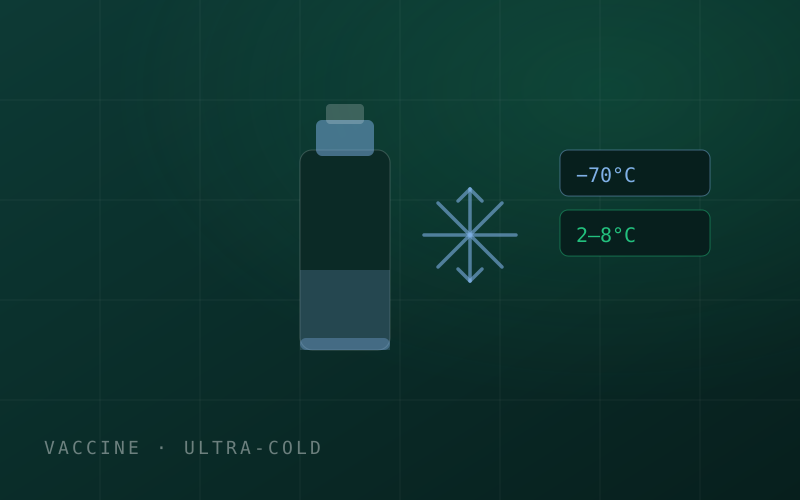
Vaccines are among the most temperature-sensitive products in the cold chain — and uniquely, for many of them freezing is as damaging as heat. Keeping vaccines potent from factory to patient demands tight temperature control, the right equipment, and monitoring that catches both warm and cold excursions.
The temperature ranges
- 2–8°C — the standard range for most refrigerated vaccines.
- Frozen — some vaccines are stored below 0°C by design.
- Ultra-cold (below −60°C) — required by certain mRNA vaccines, needing specialist ultra-low freezers or dry ice.
The exact range is product-specific, and both extremes matter: too warm degrades most vaccines, while too cold destroys freeze-sensitive ones.
The freezing problem
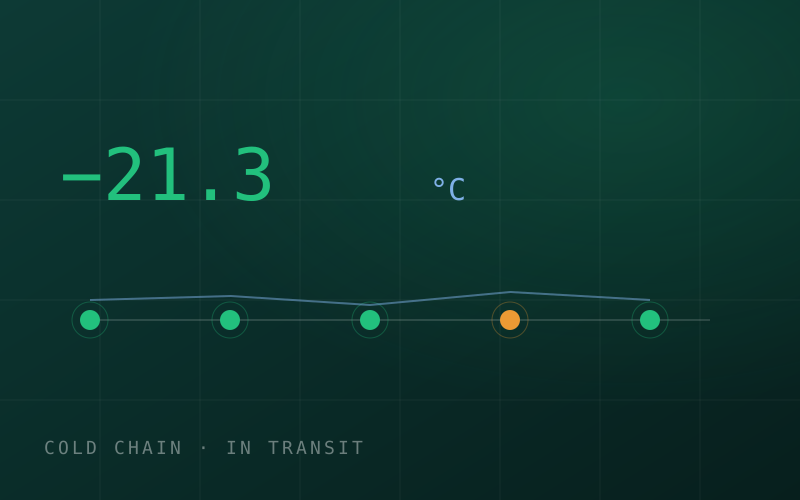
It is a common misconception that colder is safer. Several widely used vaccines — especially those with aluminium adjuvants — are permanently damaged by freezing and lose potency, often with no visible sign. A domestic-style fridge that dips below 0°C near the cooling plate can silently ruin stock. This is why vaccine fridges are purpose-built, why sensor placement matters, and why monitoring must alarm on low as well as high temperatures.
Equipment and tools
- Purpose-built vaccine refrigerators (not domestic fridges), often ice-lined or with stable air circulation to avoid cold spots.
- Cold boxes and vaccine carriers for transport and outreach.
- Ultra-low freezers or dry-ice shippers for the ultra-cold chain.
- Vaccine vial monitors (VVMs) — heat-sensitive labels that irreversibly change colour with cumulative heat exposure.
Frequently asked questions
What temperature do vaccines need?
Most need 2–8°C; some are frozen; certain mRNA vaccines need ultra-cold below −60°C — always per the product spec.
Can vaccines be frozen?
Some must be; many others are permanently damaged by freezing, so accidental freezing is a serious risk.
What is the ultra-cold chain?
Storage/transport below about −60°C for some mRNA vaccines, needing ultra-low freezers or dry ice.
What is a vaccine vial monitor?
A heat-sensitive label that irreversibly changes colour with cumulative heat exposure, showing if a vial has been overheated.
Key takeaways
- Most vaccines need 2–8°C; some frozen; some ultra-cold below −60°C.
- Freezing ruins many vaccines — monitor and alarm on low temperature too.
- Use purpose-built equipment, not domestic fridges, and VVMs as a visual aid.
- Assess every excursion against manufacturer stability guidance before use.
Related guides
- Cold chain & GDP distribution: a practical guide
- Fridge, freezer & cold room monitoring
- Temperature excursion management
Get new guides by email
Practical monitoring, mapping and calibration guides, straight to your inbox. No spam — unsubscribe anytime.