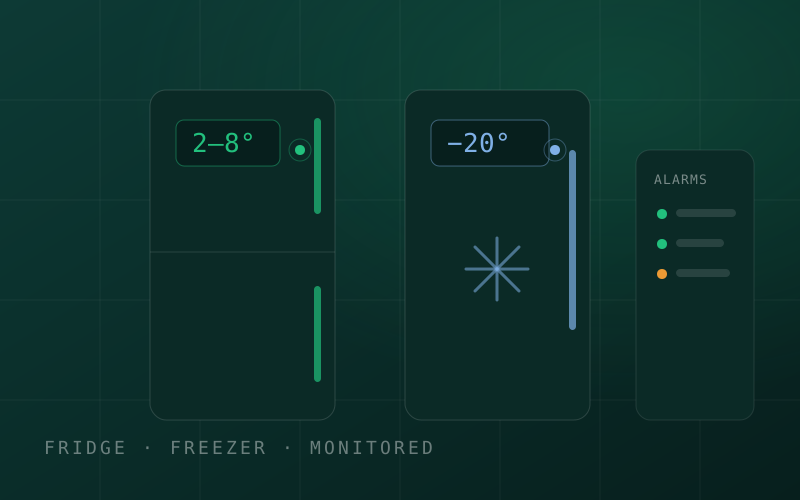
Fridges, freezers and cold rooms are where most temperature-sensitive stock actually lives — and where a silent overnight failure can wipe out thousands of pounds of product. Monitoring them properly means the right sensor, in the right place, alarming on both warm and cold, to someone who will answer out of hours.
The units, and their ranges
- Refrigerators (2–8°C) — vaccines, reagents, many medicines.
- Freezers (around −20°C) and ultra-low freezers (around −80°C) — biological samples, some products.
- Cold rooms — larger walk-in storage, effectively a small mapped space.
- Blood storage — red cells held in a tight refrigerated band with strict, alarmed monitoring.
Whatever the unit, the principle is the same: prove the product stays in range, continuously.
Sensor placement: buffer, don't guess
The most common mistake is placing the sensor in the air by the door, where every opening causes a swing and a nuisance alarm — or worse, by the cooling plate, where it may read colder than the product. Best practice is a buffered sensor: the probe sits in a small bottle of glycol or glass beads that mimics the thermal mass of the stored product. It shows what the product actually experiences and ignores brief door-opening swings, so alarms mean something.
Why domestic fridges fall short
Domestic fridges cycle widely, develop cold spots that can freeze stock, and their built-in displays are neither calibrated nor logged. For regulated storage you need purpose-built units (or at least properly monitored ones) with independent, calibrated monitoring and alarms — not the appliance's own readout.
Mapping small units
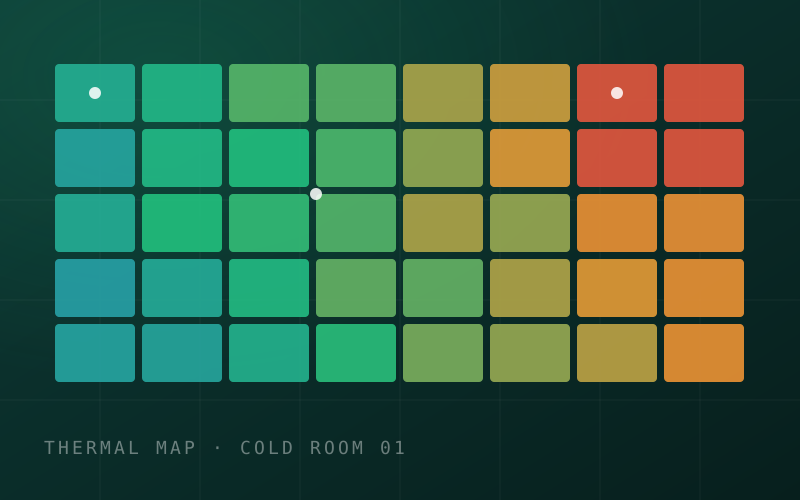
Even a single fridge or a cold room benefits from a short mapping exercise to find its warm and cold spots before you decide where the monitoring sensor and the product should sit. For cold rooms, treat it as a small mapping study in its own right.
Frequently asked questions
How should I monitor a lab or pharmacy fridge?
With calibrated continuous monitoring and high/low alarms reaching someone out of hours — not a manual daily check alone, and not a domestic fridge.
Where should the sensor go?
Positioned to reflect the product — ideally a buffered sensor in glycol or glass beads — not in the air by the door or cooling plate.
Do vaccine and blood fridges need alarms?
Yes — continuous monitoring with audible high/low alarms and out-of-hours coverage, with blood storage especially strict.
Should I use a buffered sensor?
In most refrigerated storage, yes — it reflects product temperature and avoids false alarms from door openings.
Key takeaways
- Monitor continuously and calibrate the sensor — don't rely on daily checks or appliance displays.
- Use a buffered sensor to reflect product temperature and cut nuisance alarms.
- Alarm on high and low, with out-of-hours escalation.
- Map even small units and cold rooms to place sensors and product wisely.
Related guides
- The complete guide to GDP temperature mapping
- Continuous monitoring systems: wireless vs traditional
- Vaccine cold chain: storage & freeze protection
Get new guides by email
Practical monitoring, mapping and calibration guides, straight to your inbox. No spam — unsubscribe anytime.