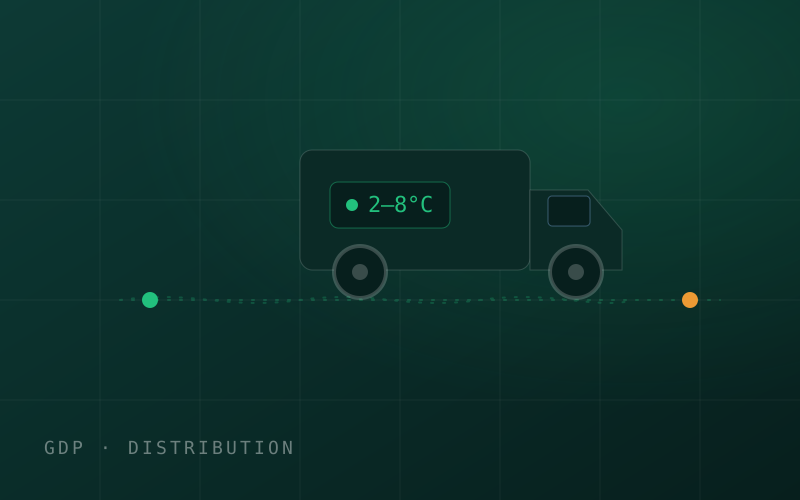
Good Distribution Practice (GDP) cold chain is the set of controls that keep temperature-sensitive medicines within their approved range — typically 2–8°C for refrigerated products — from the manufacturer all the way to the patient. Break the chain, even briefly, and you risk product degradation, regulatory action and patient harm.
What GDP requires for the cold chain
GDP applies to the storage and transport of medicinal products. In the UK it is enforced by the MHRA, requires a Wholesale Dealer's Authorisation (WDA(H)) and a named Responsible Person, and follows the EU GDP Guidelines. The core expectation is simple to state and hard to do: you must demonstrate, with data, that products stayed within their labelled temperature range at every step.
That means qualified refrigerated storage (mapped and monitored), qualified transport, and a quality system that captures and investigates any deviation.
Qualifying transport: packaging, carrier and route
Transport is where most cold chains fail, because you lose the environmental control of a fixed building. There are two broad approaches:
- Active systems: powered, refrigerated vehicles or containers that actively hold temperature. Best for large volumes and long lanes, but need their own qualification and monitoring.
- Passive systems: insulated shippers with gel packs or phase-change materials (PCMs) that hold temperature for a defined duration. Cheaper and simpler, but only valid for the qualified pack-out and transit time.
Shipping lane qualification
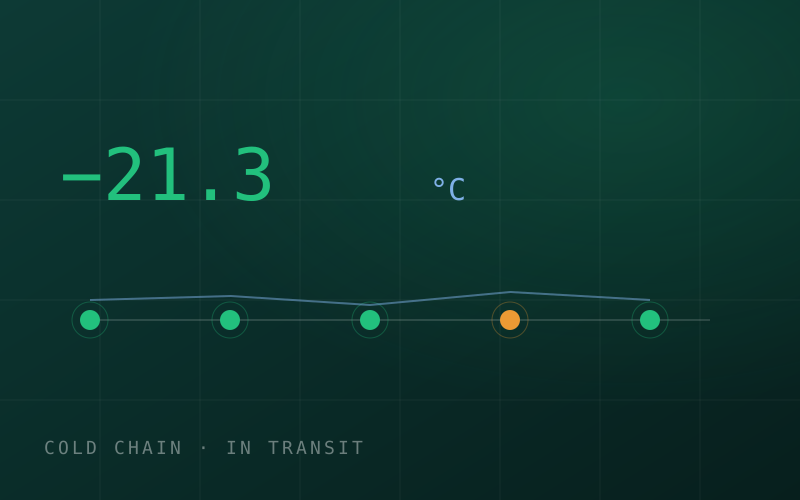
A qualified shipping lane proves that a given packaging solution, carrier and route keeps product in range for the whole journey. To qualify a lane you profile the actual transit — ideally in both summer and winter to capture worst-case ambient — measure how long the packaging holds temperature, and confirm it exceeds the realistic transit time with margin. Document the qualified configuration and don't deviate from it without re-qualifying.
Monitoring in transit
Standalone data loggers give you the temperature history on arrival; real-time GSM loggers alert you to an excursion while the shipment is still moving, so you can intervene. Match the monitoring level to the value and risk of the consignment.
Handling excursions
An excursion is not automatically a product loss. If you have stability data, you can assess a brief deviation against the product's stability budget — often using mean kinetic temperature (MKT) — and make a documented, science-based release or reject decision. What inspectors will not accept is an excursion that goes unrecorded or uninvestigated.
Frequently asked questions
What temperature range counts as cold chain?
Usually 2–8°C for refrigerated medicines, with some products needing frozen (−20°C or colder) or controlled room temperature (15–25°C). The product's label claim and stability data define the exact range you must maintain.
What is a qualified shipping lane?
A specific route and shipping method proven, with data, to hold product in range for the full transit time under worst-case seasonal conditions — covering packaging, carrier, route and season.
Do I need a data logger in every shipment?
You need temperature evidence proportionate to risk. High-risk shipments are typically monitored individually; lower-risk qualified lanes may rely on qualified packaging plus periodic monitoring, justified by a risk assessment.
What is mean kinetic temperature (MKT)?
A single calculated temperature reflecting cumulative thermal stress over time, weighting higher temperatures more heavily. It is used to judge whether brief distribution excursions are acceptable against a product's stability budget.
Key takeaways
- GDP cold chain requires qualified storage, qualified transport, continuous monitoring and documented excursion handling.
- Qualify shipping lanes in both summer and winter, and never exceed the qualified transit time.
- Real-time monitoring lets you rescue a shipment; standalone logging only tells you afterwards.
- Excursions need a stability-based, documented decision — never silence.
Related guides
- Warehouse qualification: IQ, OQ & PQ explained
- The complete guide to GDP temperature mapping
- How to choose a data logger for GxP monitoring
Not sure which provider you need?
Tell us about your sites and we’ll shortlist vetted monitoring, calibration and mapping providers that fit — free for buyers, no obligation.
Get new guides by email
Practical monitoring, mapping and calibration guides, straight to your inbox. No spam — unsubscribe anytime.