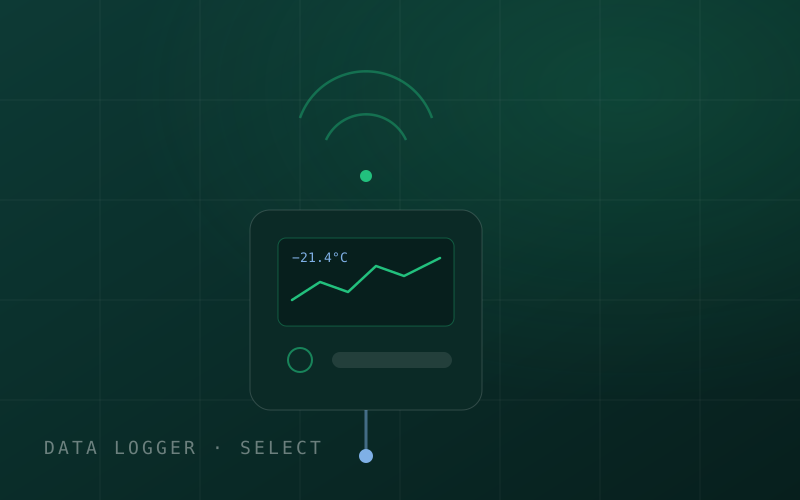
Choosing the right data logger for GxP temperature monitoring comes down to matching the device's accuracy, connectivity and data-integrity features to how you will actually use it. The best logger for a one-off mapping study is rarely the best one for permanent monitoring or for transport.
Start with the application
There is no single "best" logger. Decide what you are doing first:
- Mapping studies: you need many loggers, high accuracy and tight, known uncertainty. Small standalone USB loggers are common because you deploy dozens at once.
- Routine monitoring: fixed wireless or networked sensors that log continuously and alarm in real time, so nobody has to remember to download data.
- Transport: rugged, single-use or reusable loggers, often with real-time GSM so an excursion alerts you mid-journey.
The selection criteria that matter
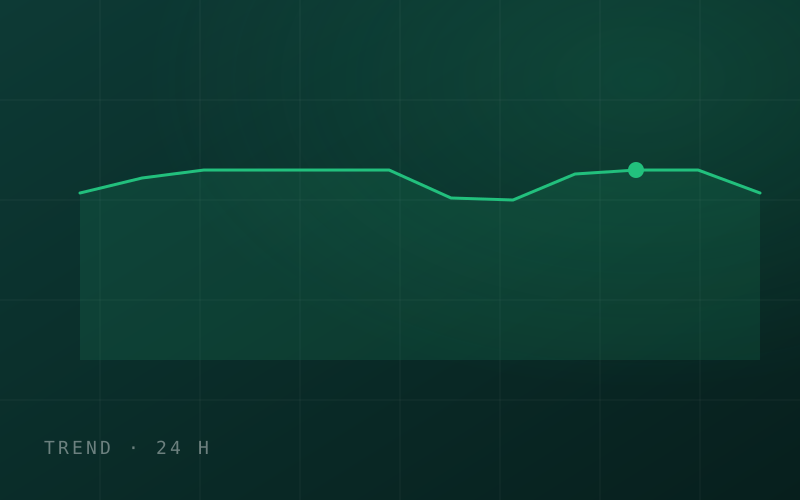
Measurement range and accuracy. Confirm the logger covers your full range (a −80°C freezer logger is a different device to a 2–8°C fridge logger). For GxP, around ±0.5°C accuracy is a reasonable baseline; for decisions near a limit, choose better and use the calibrated uncertainty.
Sensor type. Thermistors and RTDs are typical for precise pharmaceutical temperature work; thermocouples cover wider ranges with lower precision.
Logging interval and memory. Short intervals capture door-opening spikes but fill memory faster. Make sure the logger holds the whole study or monitoring period at your chosen interval.
Battery life and connectivity. Standalone (USB), Bluetooth, WiFi/networked, or GSM — each trades cost against convenience and real-time visibility.
Alarming. Real-time alarms are the difference between preventing a loss and documenting one.
Data integrity: the make-or-break feature
If the records inform GxP decisions, the logger's software must protect them. That means an audit trail, secure and attributable user access, protection against editing or deletion, and electronic-signature support where required — the essence of 21 CFR Part 11 and EU GMP Annex 11. A cheap logger whose data can be quietly overwritten will fail an inspection no matter how accurate its sensor.
Frequently asked questions
What accuracy do I need from a data logger?
About ±0.5°C is a sensible GxP baseline; use higher accuracy and account for calibrated uncertainty whenever you make pass/fail decisions near a limit.
Wireless or USB?
USB is cheaper and fine for periodic mapping; wireless/networked suits permanent monitoring with real-time alarms; transport usually needs rugged real-time GSM devices.
Does it need to be 21 CFR Part 11 compliant?
If its records drive GxP decisions, the device plus software must support audit trails, secure access and e-signatures, meeting Part 11 and Annex 11.
How often should it be calibrated?
Typically every 12 months as a risk-based baseline, plus before/after mapping studies and after any damage, traceable to national standards.
Key takeaways
- Pick the logger for the job — mapping, monitoring and transport have different needs.
- Range, accuracy, interval, memory, battery, connectivity and alarms all matter.
- Calibration (traceable, with uncertainty) is non-negotiable evidence.
- Data-integrity features decide whether the data survives an inspection.
Related guides
- The complete guide to GDP temperature mapping
- ISO 17025 calibration explained
- Cold chain & GDP distribution: a practical guide
Not sure which provider you need?
Tell us about your sites and we’ll shortlist vetted monitoring, calibration and mapping providers that fit — free for buyers, no obligation.
Get new guides by email
Practical monitoring, mapping and calibration guides, straight to your inbox. No spam — unsubscribe anytime.