A continuous monitoring system (CMS) is what you graduate to when standalone data loggers stop being enough — when you need real-time alarms, central data and an audit trail rather than a shelf of loggers to download by hand. It is the backbone of monitoring for any serious regulated operation.
Loggers vs a monitoring system
Standalone loggers are cheap and fine for one-off mapping or spot checks — but they only tell you about a problem after you download them. A CMS reports live, so a failing fridge triggers an alarm at 2am instead of being discovered at the next manual check. It also removes the manual download burden and keeps every reading in one secure, auditable place.
How a CMS is built
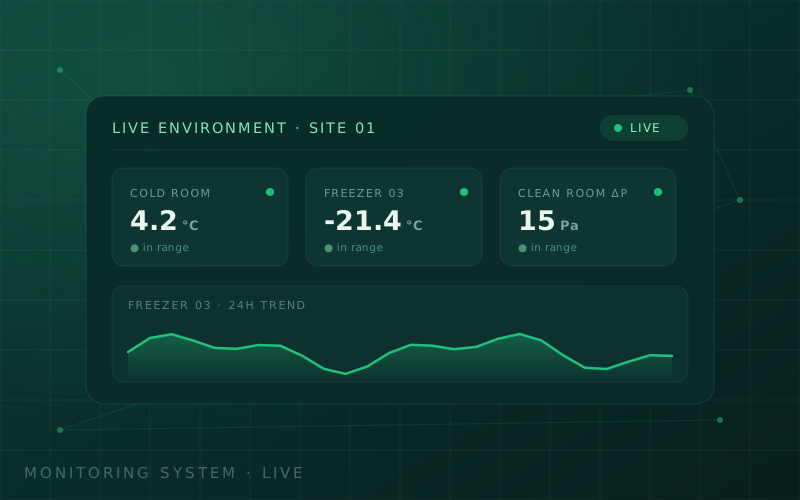
Most systems share the same architecture: sensors measure conditions; a gateway or data-collection layer gathers their readings; and software (on-premise or cloud) stores the data, shows dashboards and manages alarms. Alarms escalate — an out-of-range reading can trigger emails, texts or calls to the right people until acknowledged.
What to look for
- Accuracy and traceable calibration of every sensor.
- Reliable alarming and escalation, including out-of-hours, so nothing is missed.
- Data integrity — audit trail, individual logins, protected raw data (21 CFR Part 11 / Annex 11).
- Validation support — documentation and features that let you qualify the system.
- Scalability and connectivity resilience — room to grow and back-up if the network drops.
- Power strategy — mains with battery back-up where continuity matters.
Frequently asked questions
What is a continuous monitoring system?
Networked sensors plus software that record conditions 24/7, store data centrally and alarm in real time — replacing manual logger downloads.
Wireless or wired?
Wireless is quick to install and expand; wired can be more robust in fixed installations. Many deployments mix both.
How is it different from data loggers?
Loggers record locally and are downloaded after the fact; a CMS is real-time, alarms immediately and keeps a secure audit trail.
Does it need validation?
Yes — for GxP use the system and software must be validated and support 21 CFR Part 11 / Annex 11 data integrity.
Key takeaways
- A CMS turns monitoring from a periodic check into live, alarmed protection.
- Sensors, gateways and software form the standard architecture.
- Prioritise accuracy, reliable alarming, data integrity and validation support.
- Cloud or on-premise can both be compliant — validation is what counts.
Related guides
- How to choose a data logger for GxP monitoring
- FDA 21 CFR Part 11 & data integrity
- Fridge, freezer & cold room monitoring
Get new guides by email
Practical monitoring, mapping and calibration guides, straight to your inbox. No spam — unsubscribe anytime.