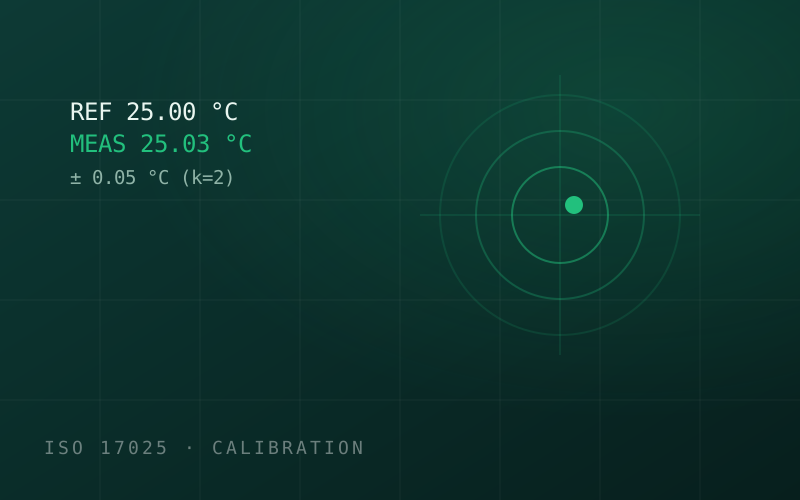
ISO 17025
ISO 17025 calibration: what it means for your data loggers
Accredited calibration, traceability, and what to check on a certificate.
Your sensor data is only as good as its calibration. Practical guidance on what ISO 17025 actually means, what certificates must contain, how often to calibrate, and how to defend your programme to a regulator.
A temperature data logger that hasn't been calibrated against a traceable reference could be reading two or three degrees off — and you'd never know. That means your mapping study, your monitoring alarms and your excursion investigations are all built on unreliable data.
GDP guidelines, GMP Annex 1 and WHO technical reports all require monitoring equipment to be calibrated using equipment with a valid certificate traceable to national standards. ISO 17025 is the international benchmark for calibration-lab competence — and a UKAS-accredited lab is the gold standard for compliance.
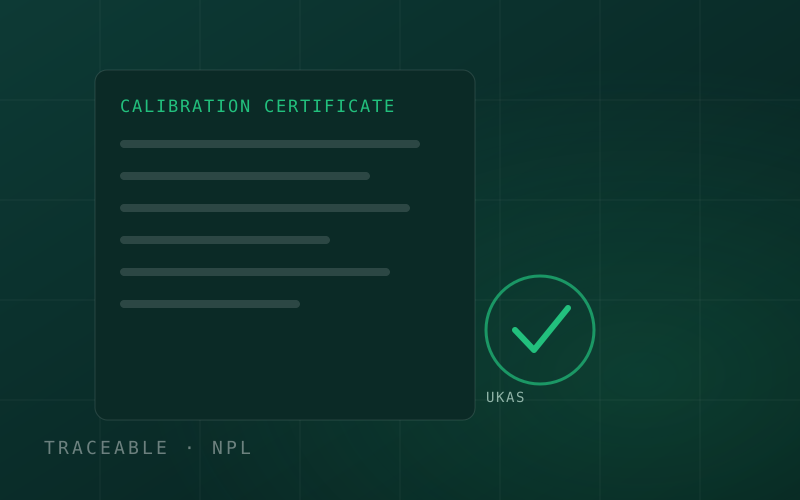
The international standard for the competence of testing and calibration laboratories. A UKAS-accredited lab has been independently assessed to prove it can produce technically valid, traceable results.
A GDP or GMP inspector will check each of these. Any gaps are a potential observation.
Intervals should be risk-assessed and documented. These are typical GDP-aligned minimums.
Accredited calibration, traceability, and what to check on a certificate.
Intervals, risk-based approaches, and how to justify your frequency to a GDP inspector.
A plain-English guide to uncertainty, confidence and compliance decisions.
Tell us about your instruments and sites, and we’ll match you with UKAS-accredited labs that meet GDP and GMP requirements. Free, no obligation.